
The Barbershop Harmony Society is devoted to promoting, preserving, and enjoying a special form of harmony known as barbershop. But what makes a particular song or arrangement "barbershop-able"? What's the difference between barbershop and doo-wop, jazz, madrigal, and other a cappella music?
Technically speaking, barbershop harmony is a style of unaccompanied singing with three voices harmonizing to the melody. The lead usually sings the melody, with the tenor harmonizing above the lead. The bass sings the lowest harmonizing notes and the baritone provides in-between notes, either above or below the lead to make chords (specifically, dominant-type or "barbershop" sevenths) that give barbershop its distinctive, "full" sound with ringing overtones.
Check out this interactive module below to learn more about the fascinating science behind our unique tuning!
The Anatomy of a Ringing Chord
Have you ever heard four voices ring with such precision that it sounds like five or six people are singing?
In barbershop harmony, that isn't studio trickery. It is the physics of acoustic resonance and pure harmonic tuning.
Audio Engine Ready
Tap each part to toggle it into the chord. Stack all four to lock and ring the sound:
Why Barbershop Doesn't Use Pianos
Modern pianos use Equal Temperament, dividing an octave into 12 identical half-steps. This allows instruments to play in any key, but compromises acoustic purity.
Because AVP sings strictly a cappella, our singers adjust intervals by mere cents on the fly. Vocalists sing a major third 14 cents lower, or a harmonic seventh 31 cents lower than a piano keyboard, producing Just Intonation.
The “Fifth Voice” Phenomenon
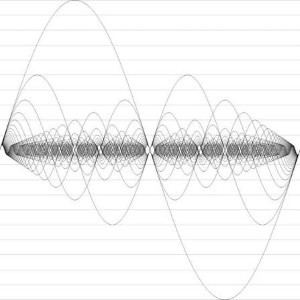
When vocalists match vowels, balance dynamic weights, and tune precisely to natural ratios (4:5:6:7), sound waves align in phase. Acoustic friction and chord beating disappear completely.
At that moment of pure resonance, acoustic reinforcement produces phantom notes known as resultant harmonic overtones. You hear a soaring, ringing fifth voice shining above the chorus, created entirely by natural acoustic physics.
| Voice | Role | Ratio | Just Pitch | Piano Pitch | Micro-Adjustment |
|---|---|---|---|---|---|
| Bass | Root | 4 | 130.81 Hz | 130.81 Hz | Foundation reference (0 cents) |
| Lead | Fifth | 6 | 196.22 Hz | 196.00 Hz | Tuned +2 cents higher for brilliance |
| Baritone | Third | 5 | 327.03 Hz | 329.63 Hz | Tuned 14 cents flat to eliminate beating |
| Tenor | 7th | 7 | 457.84 Hz | 466.16 Hz | Tuned 31 cents flat into the overtone series |
When this natural integer ratio locks, difference frequencies and summation overtones align with the fundamental. This generates acoustic reinforcement at 8x (1046.5 Hz) and beyond without extra vocal effort.